Category Recommendation:
Gear Reviews
SEO Meta Description:
Discover the best handheld GPS devices for hiking and backpacking in 2026. Compare accuracy, battery life, mapping features, and satellite communication options for outdoor adventures.
我会分几次输出(文章较长)。
开始第一部分:
Best Handheld GPS Devices for Hiking and Backpacking in 2026
Reliable navigation, long battery life, and accurate mapping make a handheld GPS an essential tool for serious outdoor adventures.
When exploring remote trails, mountain routes, or areas without cell coverage, reliable navigation can make the difference between a successful adventure and a difficult situation. While smartphones have become powerful navigation tools, dedicated handheld GPS devices still offer important advantages, including better durability, longer battery life, stronger satellite reception, and dependable performance in harsh environments.
A quality handheld GPS can help hikers follow planned routes, record tracks, monitor elevation changes, locate important waypoints, and communicate when traveling beyond cellular networks. Although traditional map and compass skills remain essential, modern GPS devices provide an additional layer of confidence for backpackers, hikers, hunters, and outdoor explorers.
After years of testing navigation equipment in different outdoor environments, we’ve selected the best handheld GPS units available in 2026. From advanced satellite communicators to simple budget-friendly navigators, these devices offer reliable options for every type of adventure.
Our Top Handheld GPS Picks
Best Overall Handheld GPS
Garmin GPSMAP 67i
Best Budget Handheld GPS
Garmin eTrex SE
Best Compact GPS Satellite Messenger
Garmin inReach Mini 3 Plus
Best Touchscreen Handheld GPS
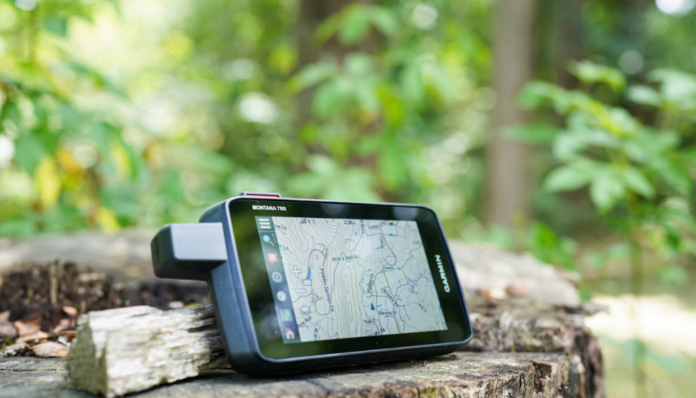
Garmin Montana 710i
Best Hands-Free GPS Option
Garmin Foretrex 801
Best Lightweight Budget Alternative
Bushnell BackTrack Mini GPS
Best Overall Handheld GPS
Garmin GPSMAP 67i
Weight: 8.1 oz.
Screen Size: 3 inches
Battery Life: Up to 180 hours in GPS mode
Storage: 16 GB with microSD support
Why We Like It
A premium navigation device that combines accurate mapping, excellent battery performance, and satellite communication features.
What Could Be Improved
The price is high, and the button-based interface may not appeal to users who prefer touchscreen controls.
The Garmin GPSMAP 67i is one of the most capable handheld GPS devices available today. Designed for serious backcountry travelers, it combines advanced navigation technology with built-in satellite communication through Garmin’s inReach system.
The biggest upgrade compared with previous models is battery performance. The device can operate for up to 180 hours in standard GPS mode and much longer when using expedition mode, making it ideal for multi-day backpacking trips where charging opportunities are limited.
The GPSMAP 67i features a highly accurate multi-band GNSS receiver that supports multiple satellite networks, allowing it to maintain reliable positioning even in challenging environments such as deep forests, narrow valleys, and mountainous terrain.
Its rugged design includes a bright 3-inch color display, physical buttons that work well with gloves, wireless connectivity, and enough internal storage for detailed maps and routes.
One of the biggest advantages is the built-in inReach satellite communication system. When outside cellular coverage, users can send and receive messages, share their location, check weather forecasts, and activate emergency SOS services.
For hikers traveling in remote wilderness areas, this feature adds an important safety benefit.
The main downside is the cost. At around $600, it is significantly more expensive than basic GPS units. It also does not include touchscreen controls, which some users may prefer for browsing maps.
However, for serious backpackers and outdoor professionals who need dependable navigation and emergency communication, the GPSMAP 67i remains one of the strongest choices in 2026.
Best Budget Handheld GPS
Garmin eTrex SE
Weight: 5.5 oz.
Screen Size: 2.2 inches
Battery Life: Up to 168 hours
Storage: 28 MB
Why We Like It
Excellent battery life and reliable navigation features at an affordable price.
What Could Be Improved
Many advanced functions require connection to a smartphone.
Not every outdoor enthusiast needs a premium GPS with satellite messaging and advanced mapping features. For hikers looking for a simple, dependable navigation tool, the Garmin eTrex SE offers impressive value.
Despite its affordable price, the eTrex SE provides excellent location accuracy thanks to multi-GNSS support, including GPS, Galileo, GLONASS, QZSS, and BeiDou satellite systems.
The compact design is durable, waterproof, and built to handle outdoor conditions. It is a practical choice for hiking, backpacking, geocaching, and general trail navigation.
Battery life is one of the device’s biggest strengths. Using standard batteries, it can operate for more than a week of continuous navigation, while expedition mode extends battery life dramatically.
The device also supports wireless connectivity with Garmin’s smartphone app, allowing users to manage routes, update information, and access additional features.
The main limitation is that some functions require pairing with a phone. Unlike higher-end GPS models, it does not include detailed preloaded maps or a large color touchscreen.
However, for hikers who want a lightweight and affordable navigation backup without unnecessary complexity, the eTrex SE is one of the best budget GPS devices available.
Best Compact GPS Satellite Messenger
Garmin inReach Mini 3 Plus
Weight: 4.4 oz.
Screen Size: 1.9 inches
Battery Life: Up to 350 hours in tracking mode
Why We Like It
A lightweight satellite communicator that combines GPS tracking, emergency messaging, and two-way communication.
What Could Be Improved
It is not designed as a complete standalone navigation device and requires a smartphone for the best mapping experience.
For many outdoor adventurers, the most important feature of a GPS device is not detailed maps but the ability to communicate when things go wrong. The Garmin inReach Mini 3 Plus is designed for hikers, backpackers, and travelers who need emergency communication without carrying a larger navigation unit.
This compact device builds on Garmin’s popular satellite messenger lineup by adding improved usability and modern features while maintaining a lightweight design.
The biggest advantage of the inReach Mini 3 Plus is its satellite communication capability. When traveling beyond cellular coverage, users can send and receive messages, share their location, access weather information, and contact emergency services through Garmin’s satellite network.
The updated touchscreen interface makes operation easier compared with previous button-only models. Users can type messages more quickly, view information more efficiently, and interact with the device with less frustration during long trips.
Battery performance remains impressive. With extended tracking settings, the device can last for hundreds of hours, making it suitable for multi-day wilderness adventures.
However, the inReach Mini 3 Plus is not a replacement for a full handheld GPS. Its small screen and limited onboard navigation features mean most users will get the best experience by connecting it with a smartphone running Garmin’s navigation applications.
For ultralight backpackers who prioritize emergency communication and location sharing, the inReach Mini 3 Plus is one of the best compact satellite devices available.
Best Touchscreen Handheld GPS
Garmin Montana 710i
Weight: 14.5 oz.
Screen Size: 5 inches
Battery Life: Up to 24 hours in GPS mode
Storage: 32 GB with microSD support
Why We Like It
A large touchscreen display, advanced mapping features, and extremely rugged construction.
What Could Be Improved
The large size and weight make it less suitable for lightweight backpacking.
The Garmin Montana 710i is built for users who want a navigation experience closer to a smartphone while maintaining the durability of a dedicated outdoor GPS.
Its biggest feature is the large 5-inch touchscreen. Compared with traditional handheld GPS units with smaller displays and physical buttons, the Montana 710i provides a much easier way to view maps, adjust routes, and explore navigation information.
The display is designed for outdoor use, remaining visible in bright sunlight and allowing operation while wearing gloves.
Beyond the screen, the Montana 710i includes advanced navigation features such as multi-GNSS support, detailed topographic mapping, elevation sensors, and built-in satellite communication through Garmin inReach technology.
The rugged construction is one of its strongest advantages. The device is designed to withstand demanding environments and is suitable for activities such as motorcycle touring, overlanding, hunting, and extended backcountry exploration.
Battery performance has also improved compared with previous generations. The device can operate for a full day of navigation and significantly longer in power-saving modes.
The main disadvantage is size. At more than 14 ounces, the Montana 710i is considerably heavier than compact hiking GPS units.
For backpackers counting every ounce, a smaller GPS device may make more sense. But for users who prioritize screen size, mapping convenience, and durability, the Montana 710i is one of the most capable touchscreen GPS units available.
Best Hands-Free GPS Option
Garmin Foretrex 801
Weight: 3.8 oz.
Screen Size: 2.2 inches
Battery Life: Up to 100 hours in navigation mode
Why We Like It
Lightweight design, excellent battery life, and hands-free operation.
What Could Be Improved
It does not support detailed downloadable maps.
The Garmin Foretrex 801 takes a different approach compared with traditional handheld GPS devices. Instead of carrying a unit in your hand or pocket, this compact navigation tool attaches directly to your wrist.
The hands-free design makes it especially popular among hunters, military users, adventure racers, and outdoor travelers who need navigation information while keeping their hands available.
Despite its small size, the Foretrex 801 includes many features found on larger GPS devices. It supports multiple satellite systems, provides accurate positioning, and includes useful sensors such as a digital compass and barometric altimeter.
Battery life is another major strength. With expedition mode enabled, the device can last up to 1,000 hours, making it ideal for long trips where charging is difficult.
The rugged design is built for harsh environments, and the simple monochrome display remains easy to read in direct sunlight.
The biggest limitation is navigation capability. Unlike larger handheld GPS units, the Foretrex 801 does not allow users to download detailed topographic maps. Instead, navigation relies mainly on recorded tracks, waypoints, and directional guidance.
For users who need a lightweight tracking device rather than a full mapping system, the Foretrex 801 offers a unique and practical solution.
Best Lightweight Budget Alternative
Bushnell BackTrack Mini GPS
Weight: Approx. 4 oz.
Best For: Simple route tracking and basic navigation
Why We Like It
Small, affordable, and easy to use.
What Could Be Improved
Limited mapping features compared with premium GPS devices.
Not every outdoor trip requires an advanced navigation system. Some hikers simply want a lightweight device that can record their route and help them return safely.
The Bushnell BackTrack Mini GPS focuses on simplicity. Its compact design makes it easy to carry, and the straightforward interface works well for casual hikers, campers, and outdoor beginners.
The device can record locations, mark important points, and provide basic navigation assistance without the complexity of professional GPS units.
Its biggest advantage is portability. It takes up very little space in a backpack and works well as an additional safety tool.
However, users who need detailed maps, satellite messaging, or advanced route planning will quickly outgrow its capabilities.
For occasional outdoor adventures, it remains an affordable and convenient navigation option.
How to Choose a Handheld GPS Device
Choosing the right GPS depends on the type of adventure you plan to take. Different users have very different requirements.
Navigation Accuracy
Modern GPS devices use multiple satellite networks to improve accuracy. Models supporting GPS, Galileo, GLONASS, and multi-band positioning generally perform better in difficult environments such as forests, mountains, and deep valleys.
If you frequently explore remote terrain, investing in a device with stronger satellite reception can improve reliability.
Battery Life
Battery performance is one of the biggest advantages of dedicated GPS devices compared with smartphones.
For short day hikes, most GPS units provide more than enough battery life. However, backpackers on week-long trips should consider models with extended expedition modes or replaceable batteries.
A longer battery life means fewer charging concerns and greater confidence in remote locations.
Mapping Features
GPS devices range from simple location trackers to full navigation computers.
Consider whether you need:
- Preloaded topographic maps
- Downloadable trail maps
- Route planning
- Elevation information
- Offline navigation
Serious backpackers usually benefit from devices with detailed mapping capabilities, while casual hikers may only need basic tracking.
Satellite Communication
For remote adventures, satellite communication can be an important safety feature.
Devices with satellite messaging allow users to:
- Send emergency alerts
- Communicate without cell service
- Share locations with family members
- Receive weather updates
This feature is especially valuable for solo hikers and people traveling far from established trails.
Screen Type
Handheld GPS devices generally use either buttons or touchscreen controls.
Button Controls
Advantages:
- Work better with gloves
- Consume less power
- More reliable in harsh weather
Touchscreens
Advantages:
- Easier map browsing
- More familiar smartphone-like operation
- Faster route management
The best choice depends on your environment and personal preference.
How We Test Handheld GPS Devices
Choosing the best handheld GPS requires more than comparing specifications. Real-world performance is what matters most when a device is used far from roads, cell towers, and reliable power sources.
We evaluate GPS devices based on several important factors, including navigation accuracy, battery performance, durability, usability, and outdoor functionality.
Location Accuracy Testing
A GPS device is only useful if it can consistently provide accurate positioning.
We test units in different environments, including:
- Dense forests with limited sky visibility
- Mountain areas with steep terrain
- Open landscapes
- Long-distance hiking routes
Devices with multi-band satellite support usually perform better in challenging conditions because they can maintain stronger connections with multiple satellite networks.
Battery Performance Testing
Battery life is critical for backpacking and extended outdoor trips.
We test GPS devices during realistic adventures rather than relying only on manufacturer specifications.
Important factors include:
- Standard navigation mode battery life
- Power-saving modes
- Satellite communication usage
- Screen brightness settings
- Temperature effects
A GPS unit that lasts several days without charging provides a major advantage for remote adventures.
Ease of Use
Outdoor navigation should be simple and reliable.
We evaluate:
- Menu design
- Button placement
- Touchscreen responsiveness
- Map readability
- Route creation process
- Operation with gloves
A device with excellent features is less useful if it is difficult to operate during bad weather or stressful situations.
Durability Testing
Outdoor equipment needs to survive demanding conditions.
We consider:
- Water resistance
- Impact protection
- Build quality
- Performance in cold temperatures
- Long-term reliability
The best handheld GPS units are designed to handle rain, dust, drops, and rough trail conditions.
Handheld GPS vs Smartphone Navigation
Modern smartphones have changed outdoor navigation. Many hiking apps now provide excellent maps and route planning tools, but dedicated GPS devices still have several important advantages.
Advantages of a Handheld GPS
Better Battery Management
GPS devices are designed specifically for navigation. They usually consume less power than smartphones running maps, GPS, and mobile data simultaneously.
More Durable Construction
Dedicated GPS units are built for outdoor environments. They are typically waterproof, impact-resistant, and easier to use in harsh conditions.
Better Satellite Reception
Many handheld GPS units include stronger antennas and advanced satellite technology that can improve accuracy in difficult terrain.
Works Without Cell Service
A smartphone may lose functionality when offline, while a dedicated GPS continues working anywhere satellites are available.
Advantages of Smartphone Navigation
Better Displays
Modern phones often have brighter and higher-resolution screens.
Easier Interface
Most people already understand smartphone navigation apps.
More Flexible Applications
Phones can combine maps, weather information, photography, communication, and other tools in one device.
Which One Should You Choose?
For casual hiking and day trips, a smartphone with offline maps may be enough.
For serious backpacking, solo wilderness travel, and remote adventures, a dedicated handheld GPS provides additional reliability and safety.
Many experienced outdoor travelers use both:
- Smartphone for detailed maps and convenience
- Handheld GPS for dependable navigation
- Satellite messenger for emergencies
This combination provides the best balance between technology and safety.
Final Recommendations: Which Handheld GPS Is Right for You?
The best handheld GPS depends on your outdoor goals.
Best Overall Choice
Garmin GPSMAP 67i
Best for:
- Backpackers
- Remote hikers
- Wilderness explorers
- International adventure travelers
It offers the strongest combination of navigation accuracy, battery life, durability, and satellite communication.
Best Budget Choice
Garmin eTrex SE
Best for:
- Casual hikers
- Beginners
- Budget-conscious outdoor users
It provides reliable navigation without unnecessary complexity.
Best Satellite Communication Device
Garmin inReach Mini 3 Plus
Best for:
- Ultralight backpackers
- Solo adventurers
- Emergency communication
Its compact design makes it easy to carry while still providing essential safety features.
Best Large-Screen GPS
Garmin Montana 710i
Best for:
- Overlanding
- Motorcycle touring
- Hunters
- Users who prefer touchscreen navigation
Its large display and rugged design make it ideal for demanding navigation tasks.
Best Lightweight GPS
Garmin Foretrex 801
Best for:
- Minimalists
- Hunters
- Fast-moving outdoor athletes
It delivers excellent battery life in an extremely compact package.
Final Thoughts
A handheld GPS remains one of the most valuable tools for exploring beyond the reach of cell networks. While smartphones continue to improve, dedicated GPS devices still offer advantages in durability, battery life, and reliability.
The right device depends on your adventure style. Weekend hikers may only need a simple GPS tracker, while serious backpackers traveling deep into the wilderness will benefit from advanced navigation and satellite communication features.
Whether you are planning a long-distance trek, exploring remote trails, or preparing for unexpected situations, a reliable handheld GPS can provide confidence and security when you need it most.